Why Minimalist Watches Are Popular: The 2026 Perspective
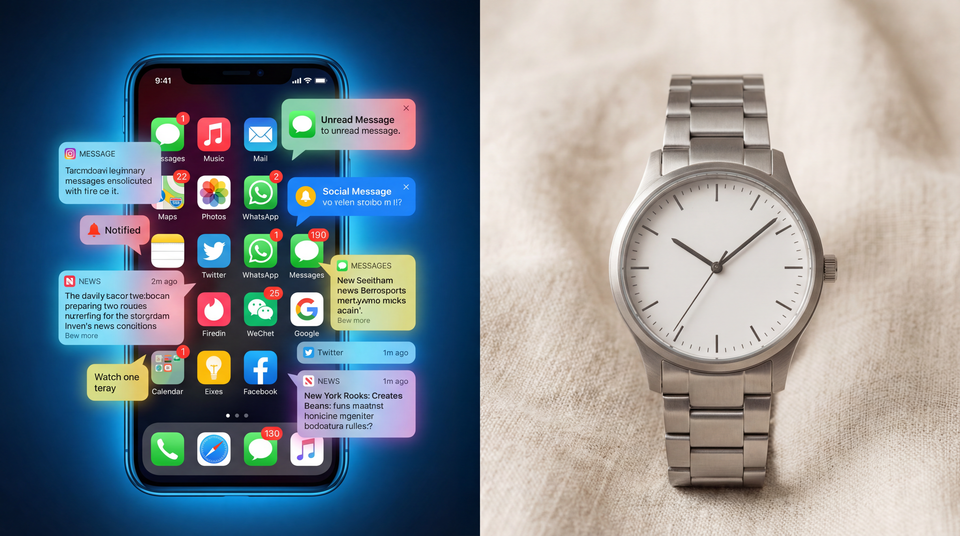
A glance at the modern wrist tells a story of profound exhaustion. For the better part of a decade, we strapped miniature command centers to our arms, willingly tethering ourselves to a relentless rhythm of haptic vibrations, step counters, and urgent calendar alerts. We wore our hyper-connectivity as a badge of honor. But something shifted as we crossed into 2026. The glow of the OLED screen lost its luster. The oversized, diamond-encrusted chronographs that once signaled arrival now simply look loud.
In their place, a quieter aesthetic has taken root. A sterile dial. A slim profile. A watch that does nothing more than tell the time.
This is not merely a cyclical swing of the fashion pendulum. The resurgence of the minimalist watch is a direct, visceral response to a culture that has reached peak saturation. When every object we own demands our attention, the ultimate luxury is an object that asks for nothing. As we navigate the complexities of 2026, the minimalist watch has emerged as the definitive accessory of the intentional consumer—a masterclass in restraint, an anchor to the analog world, and the purest expression of Quiet Luxury.
The Psychological Core: The Antidote to Decision Fatigue

To understand the appeal of a blank watch face, one must first understand the state of the modern mind. Recent data paints a stark picture of our digital reality: an individual born today is projected to spend over 21 years of their life—more than 181,000 hours—staring at a screen 1. We are perpetually stimulated, endlessly scrolling, and suffering from a profound case of digital overwhelm.
In this environment, "decision fatigue" is no longer just a buzzword; it is a daily, lived reality. We are exhausted by micro-trends, infinite scrolling, and the pressure to optimize every waking second. The minimalist watch offers a rare sanctuary of cognitive economy. It is a method of managing complexity by stripping away the superfluous.
When you look down at a beautifully austere dial—perhaps devoid of numerals, lacking a date window, with hands sweeping silently across a matte surface—you are not greeted by an unread email or a glaring reminder of a missed fitness goal. You are simply given the time. This interaction is aesthetically calming; it visually represents peace.
Psychologists note that people are increasingly communicating their internal state through their wallets, opting to "de-technologize" their lives 1. We crave the resistance of the physical world. The act of winding a mechanical watch or feeling the cool touch of brushed steel is grounding. It anchors us in the present moment. In 2026, minimalism is not a reaction to maximalism; it is a response to an overabundance of noise. It is the deliberate choice of meaning over distraction.
| Psychological Driver | The Digital Era (Pre-2025) | The Minimalist Era (2026 Onward) |
|---|---|---|
| Status Signaling | Loud branding, conspicuous wealth | Taste, restraint, "if you know, you know" |
| Daily Interaction | Reactive (responding to notifications) | Intentional (checking time on one's own terms) |
| Mental State | Decision fatigue, hyper-stimulation | Cognitive economy, aesthetic calm |
| Core Value | Accumulation and optimization | Editing and presence |
The 2026 Shift: The Death of the Oversized Statement Piece
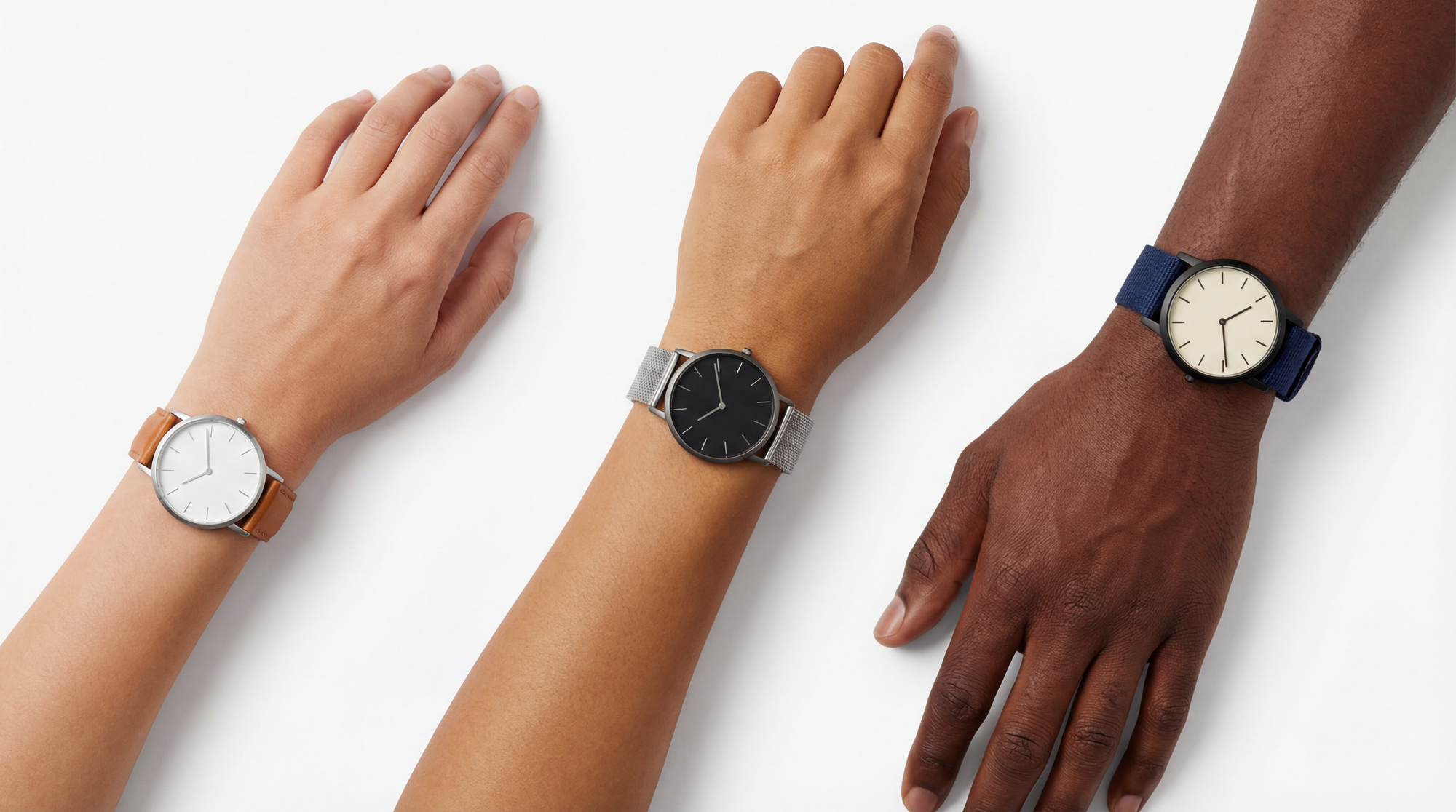
If the psychology of 2026 is defined by a desire for quiet, the market data reflects a corresponding physical shrinking. The era of the 42mm-plus oversized sports watch—the heavy steel behemoths that dominated boardrooms and weekend wear alike—is officially dead.
Industry analysts project the global minimalist watch market to reach a staggering USD 2.02 billion this year, driven by a compound annual growth rate that outpaces traditional, highly complicated timepieces 8. But the most telling metric is the size of the watches driving this revenue.
The industry has firmly settled into a new "sweet spot": the 36mm to 38mm case size. This downsizing is not a niche preference; it is a sweeping movement led by both Gen Z and Millennials. For Millennials, the shift is practical. A 37mm slim-profile watch slides effortlessly under a tailored cuff, complementing a refined, business-casual wardrobe without screaming for attention.
For Gen Z, the motivation is ideological. This generation, fatigued by the constant churn of online aesthetics, is driving what horologists are calling the "Dress Watch Renaissance" 11. They prioritize individuality, storytelling, and understated elegance over raw flex culture. Furthermore, the 36-38mm range has catalyzed the total collapse of gender-specific sizing. Watches are no longer categorized as "men's" or "women's"—they are simply wearable, proportioned objects of refined adornment.
As vintage watch expert Balazs Ferenczi notes, the market is moving rapidly toward pieces that are "smaller, simpler, more elegant and more dressy" 15. In 2026, true confidence stems from quiet quality, not loudness.
| Demographic Focus | Primary Motivation for Minimalist Watches | Preferred Case Size | Spending Behavior |
|---|---|---|---|
| Gen Z (1997-2012) | Anti-trend identity, vintage appeal, gender-neutrality | 34mm - 36mm | Polarized: Entry-level or high-end investment |
| Millennials (1981-1996) | Workplace versatility, digital detox, cognitive relief | 36mm - 39mm | Mid-to-high tier, focus on established heritage |
Size-to-Wrist Recommendation Guide
To navigate this new era of refined proportions, understanding case size in relation to wrist circumference is crucial. The goal is harmony, not dominance.
| Wrist Circumference | Recommended Case Size | Ideal Lug-to-Lug Measurement | Aesthetic Result |
|---|---|---|---|
| Under 6.0 inches | 34mm - 36mm | 40mm - 42mm | Classic, vintage-inspired elegance |
| 6.0 to 6.75 inches | 36mm - 38mm | 42mm - 45mm | The 2026 standard; perfectly proportioned |
| 6.75 to 7.5 inches | 38mm - 40mm | 45mm - 47mm | Substantial but restrained |
| Over 7.5 inches | 39mm - 41mm | 47mm - 49mm | Modern presence without bulk |
The Design Legacy: Form, Function, and Quiet Luxury
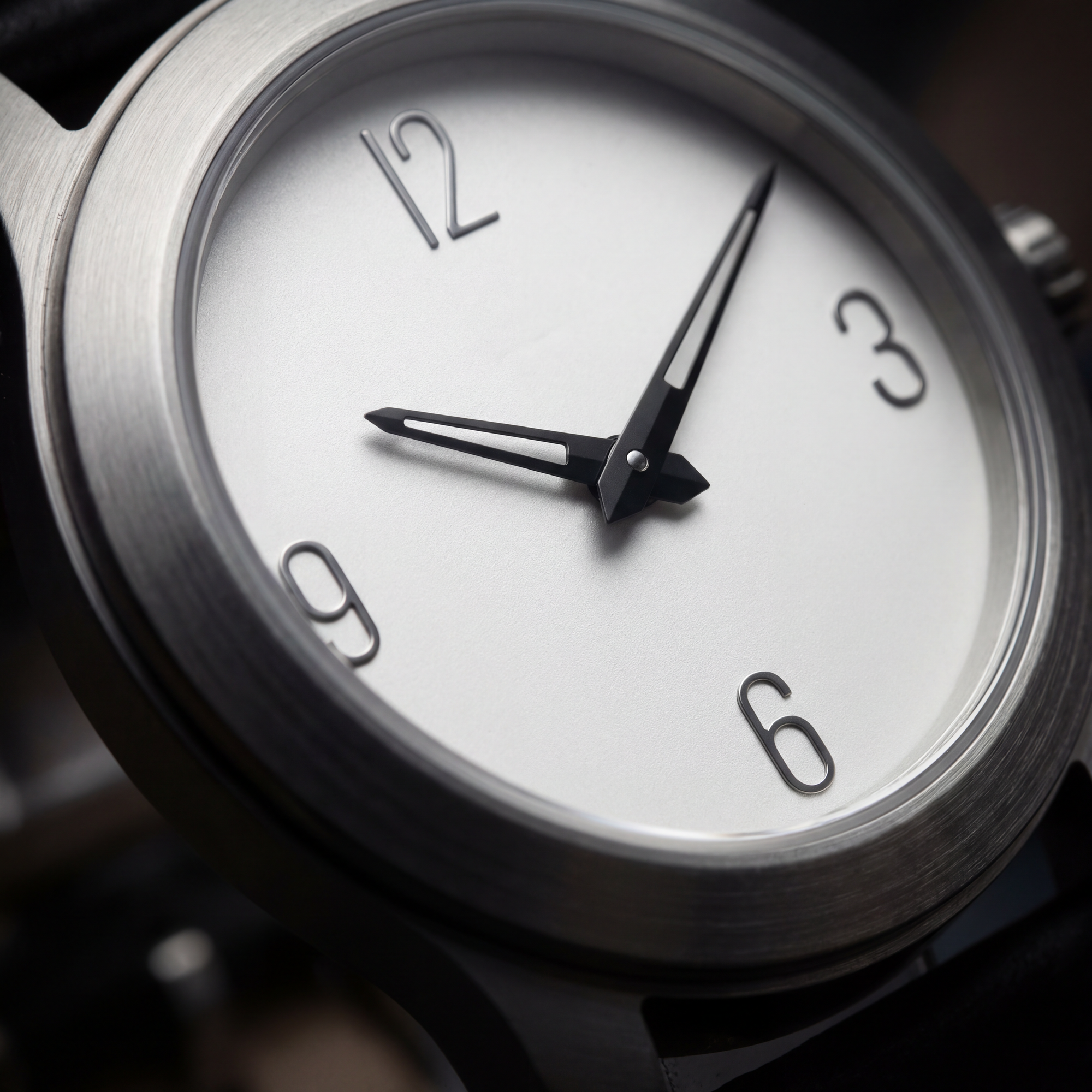
To view the minimalist watches of 2026 as entirely new creations would be a mistake. The most compelling pieces on the market today are deeply indebted to historic design philosophies that prioritized function long before "user interface" was a tech-industry term.
At the forefront is the legacy of the German Bauhaus movement. Founded in 1919, the Bauhaus school operated on a ruthlessly logical principle: form follows function. When applied to horology, this ethos treats design not as decoration, but as a disciplined process. Consider the Junghans Max Bill, a masterpiece of 20th-century design that feels more relevant today than ever. Every line, every thin geometric numeral, and every millimeter of negative space exists for a reason. The dial is balanced through careful spacing, removing everything unnecessary to leave a surface that is quietly precise 4. It is a reminder that the most powerful design choices are often the simplest ones.
Running parallel to the Bauhaus influence is the rich tradition of Scandinavian design. Nordic aesthetics have long married functionality with a deep appreciation for natural materials and light. Brands like Nordgreen and Skagen have translated this heritage into ultra-thin profiles that sit lightly on the wrist 6 7. Their palettes rely on soft greys, classic blacks, and earthy tones—colors that do not compete with the wearer but rather complement them.
Minimalism, as executed by these traditions, is often mistaken for being "plain." In reality, minimalist design is one of the most unforgiving feats in industrial engineering. When you strip away the distractions of thick bezels, tachymeter scales, and contrasting sub-dials, there is nowhere to hide. Any imperfection in the finishing, the symmetry of the indices, or the sweep of the hands is immediately magnified 5. A truly exceptional minimalist watch is a triumph of exacting execution.
| Design Philosophy | Core Principles | Aesthetic Signatures | Leading Modern Examples |
|---|---|---|---|
| Bauhaus (German) | Form follows function, geometric harmony | Thin numerals, sterile dials, domed crystals | Junghans Max Bill, NOMOS Glashütte Tangente |
| Scandinavian (Nordic) | Organic integration, everyday utility | Ultra-thin profiles, muted earth tones, mesh bands | Nordgreen Philosopher, Skagen Grenen |
| Japanese Zen | Balance, continuous flow, meticulous finish | Sweeping seconds, textured natural dials | Grand Seiko (Elegance Collection), Citizen |
Notable Minimalist Timepieces of 2026
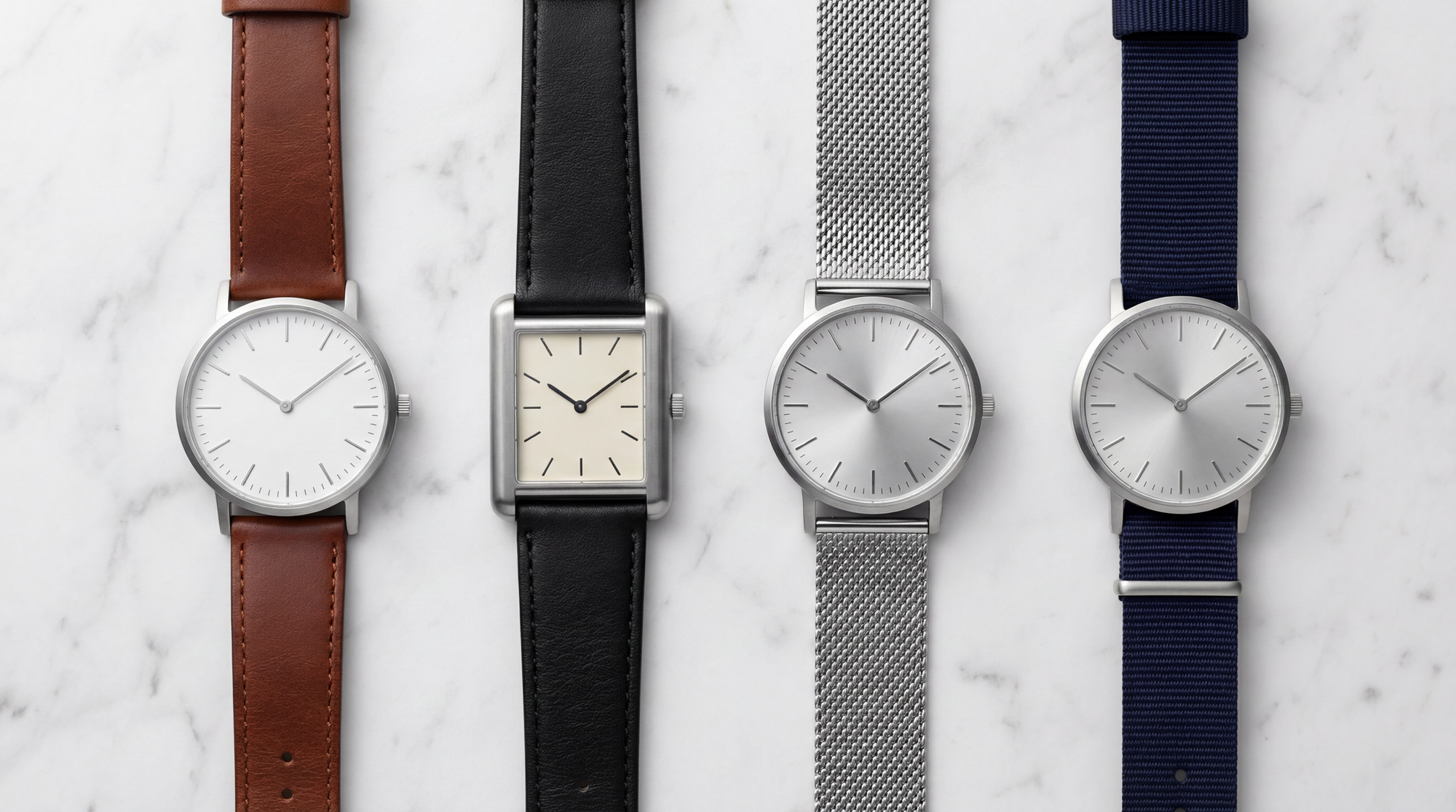
| Brand & Model | Movement | Case Size | Defining Minimalist Feature |
|---|---|---|---|
| Junghans Max Bill Automatic | Swiss Mechanical | 38mm | Pure Bauhaus geometry; absence of unnecessary text |
| NOMOS Glashütte Orion | In-house Manual | 35mm | Tempered blue hands against a stark galvanized dial |
| Nordgreen Native | Japanese Quartz | 36mm / 40mm | Invisible lugs and a clean, elevated dial face |
| Cartier Tank Must | Quartz / Mechanical | Varies (Rectangular) | The ultimate exercise in restrained, timeless geometry |
The Sustainability Angle: Longevity Over Trends
The final, and perhaps most vital, pillar supporting the 2026 minimalist watch boom is a radical shift in how we view consumption. We are living in the era of "Frugal Chic" and the "No Buy" movement 12. Consumers are actively rejecting the endless, wasteful cycle of fast fashion, opting instead for a philosophy of "Buy Less, Buy Better."
A watch with a hyper-specific, trendy design—a bright neon dial or an aggressive, brutalist case—comes with an expiration date. It is tethered to the moment it was created. A minimalist watch, by definition, exists outside of the trend cycle. Its clean lines and lack of flashy branding ensure that it will look as appropriate with a tailored suit in ten years as it does with a cashmere sweater today. Choosing a minimalist watch is an investment in versatility; it is the ultimate multi-purpose item.
This cultural shift toward longevity is pushing the watch industry to clean up its act. A reported 72% of watch brands are now heavily investing in sustainability initiatives 13. We are seeing a surge in the use of recycled materials, from TRIWA's "Time for Oceans" collection crafted from recycled ocean plastics to luxury houses utilizing up to 80% recycled steel and gold alloys 13.
However, the truest form of sustainability is durability. As the industry adage goes: it is far more sustainable to buy one impeccably crafted, durable watch than a dozen flimsy ones 13. The minimalist watch buyer in 2026 understands this implicitly. They are not buying an accessory for a season; they are acquiring a companion for a decade.
The Quiet Revolution
The watch industry of 2026 is unrecognizable from the flashy, oversized landscape of the early 2020s. We have collectively exhaled. We have recognized that in a world racing toward the next digital upgrade, the most radical innovation is a step back toward restraint, patience, and mastery 16.
A minimalist watch does not shout your net worth across a crowded room. It does not vibrate to remind you of a meeting. It sits quietly on the wrist, a beautifully engineered piece of metal and glass, performing one singular task with perfect grace. In an era of absolute noise, that silence is the ultimate luxury.
Key Takeaways
| Takeaway | Summary |
|---|---|
| The Analog Antidote | Minimalist watches offer relief from "decision fatigue" and the digital overwhelm of modern screen-centric life, serving as grounding, single-purpose tools. |
| The 38mm Sweet Spot | The era of oversized watches is over. The market has shifted toward refined, gender-neutral case sizes between 36mm and 38mm. |
| Heritage Driven | Modern minimalism is deeply rooted in the functional logic of the Bauhaus movement and the organic, everyday utility of Scandinavian design. |
| Quiet Luxury | Consumers (especially Gen Z) are rejecting flashy branding in favor of "status signaling through taste"—investing in high-quality, understated pieces. |
| Built to Last | Aligning with the "Buy Less, Buy Better" ethos of 2026, minimalist watches offer timeless versatility that inherently combats the wastefulness of fast fashion. |